Short course
Basics of Pneumatic Conveying
Instructor
Jonathan McPherson
 Jonathan McPherson is the director of K-State's Advanced Manufacturing and Bulk Solids Technology Center. Jonathan comes from industry having spent 11 years designing and commissioning material handling projects as a project engineer and developing business relationships in the markets of performance materials, battery and general industry as an account executive. His project backgrounds include plastics, PVC, paint, lead-acid battery, food and confectionary.
Learning Objectives
At the conclusion of this course, you will understand:
- The various types of pneumatic conveying systems and when and why to use each type.
- The importance and functionality of each system component.
- Key considerations for designing a pneumatic conveying system tailored to different materials.
- Best practices for operating and maintaining a safe pneumatic conveying system.
- Troubleshooting techniques for resolving common system issues.
Who is it intended for?
Engineers, technicians, maintenance and operations personnel who work with bulk solids or the transportation of these materials.
Participants are encouraged to bring their specific questions and issues for discussion.
Format
This is a two-day in-person course held at K-State Olathe, which is located at 22201 W. Innovation Drive, Olathe, KS 66061.
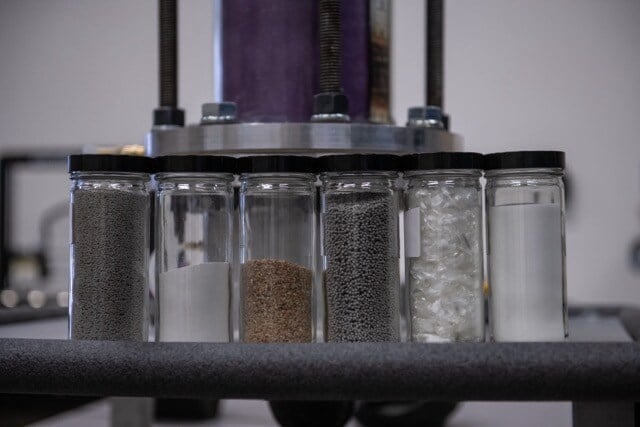
In addition, hands-on demonstrations of conveying and all componentry will occur at one of our company partners. Please note that attendees are responsible for arranging their own transportation to the partner facility, which is located approximately 20 miles from campus.
For safety during these demonstrations, participants are required to wear long pants and closed-toe shoes.