Learn. Lead. Succeed.
Strategies in Manufacturing: Optimizing Your Leadership

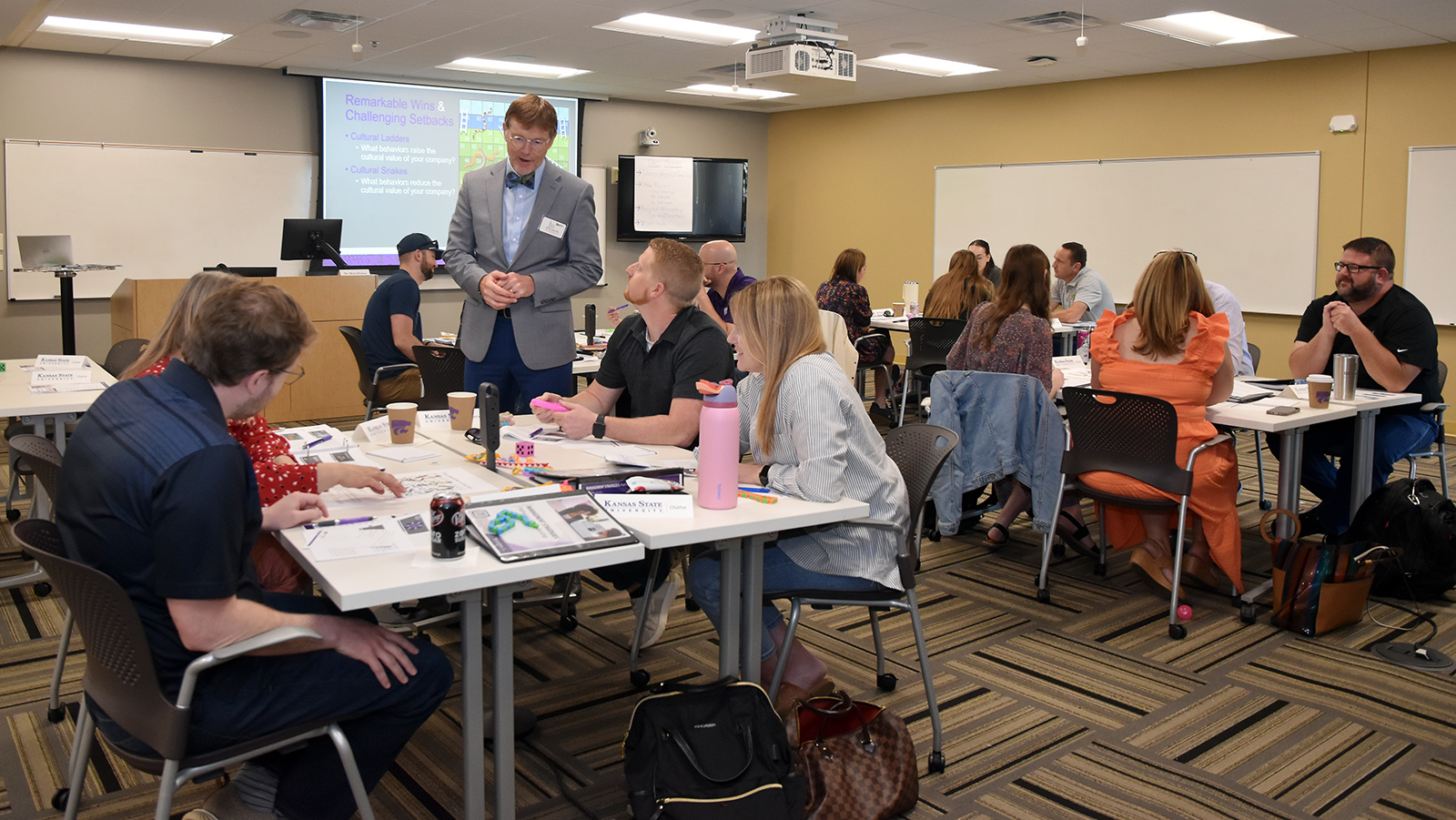

Develop the leaders who drive your production floor
Frontline leaders play a critical role in productivity, safety, workforce retention and operational excellence. This program equips emerging and current supervisors with practical leadership tools — built for the realities of modern manufacturing — so they can lead high-performing teams and support your strategic goals.
This series is specifically designed for those frontline managers, supervisors and team leads working in KC's advanced manufacturing industries. Throughout four days, they'll learn new skills, practical strategies and how to solve real-world challenges that routinely impact their workplace.
Schedule and Format
This series consists of four day-long sessions held in-person every Thursday in June 2026. All in-person session are at the K-State Olathe campus, located at 22201 W. Innovation Drive, Olathe, KS 66061. A virtual group coaching session will follow-up the series the week of July 27. Lunch is provided at each in-person session.|
June 4 Session 1 |
June 11 Session 2 |
June 18 Session 3 |
June 25 Session 4 |
Week of July 27 Virtual Session |
KC OPS Membership
 Attendees also will receive and 3 month preview membership to KC OPS, a leadership development program for production managers working in manufacturing and fabrication firms in the Greater Kansas City area. Learn more about KC OPS.

Learn. Lead. Succeed.
Registration for June 2026 has closed.
Don't miss the next opportunity. Sign up below to receive updates and be the first to know about new offerings.

Session 1 is about optimizing team productivity.
June 4 | Led by Judy Favor

Session 2 covers the multigenerational and globalized workplace and tough conversations.
June 11 | Led by Meaghan Bircher and Judy Favor

Session 3 covers problem-solving and effective feedback.
June 18 | Led by Brett Horton and Margie Banach
